Google Ads Management
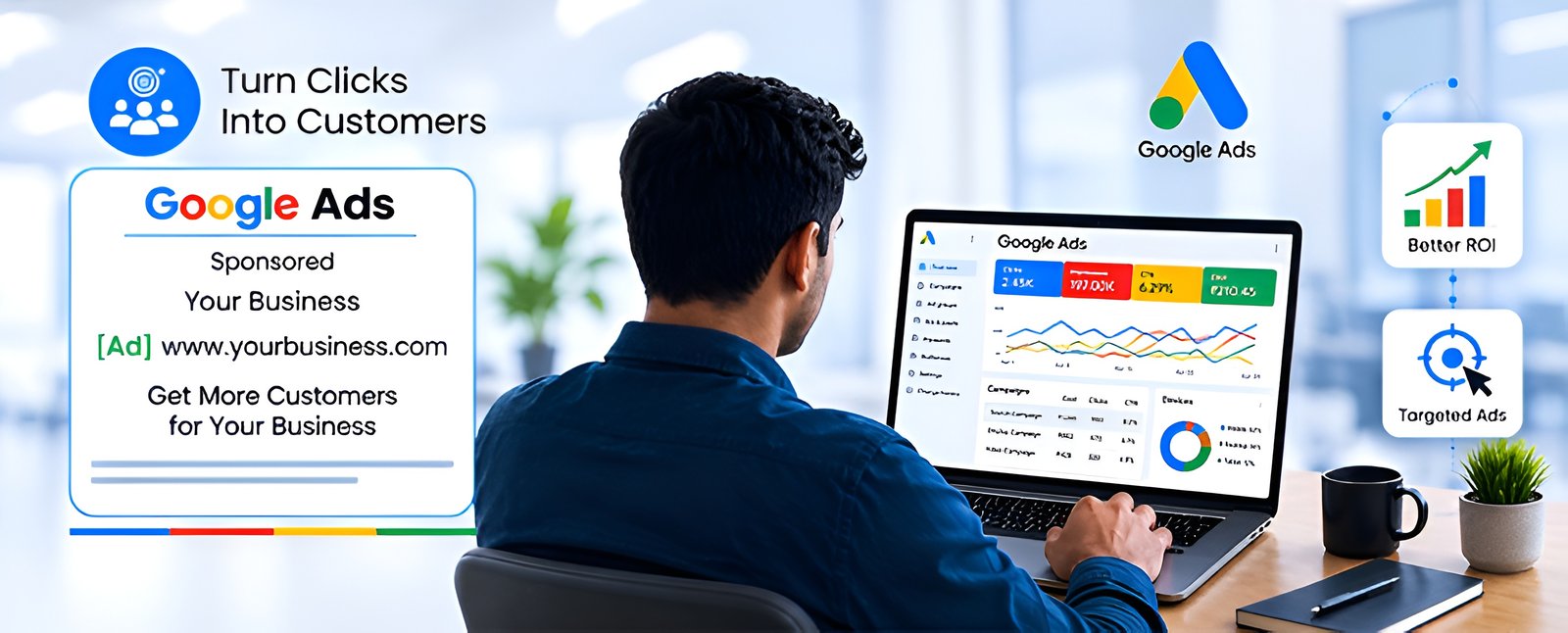
Google Ads Management
Google Ads Management is the complete process of planning, creating, launching, monitoring, optimizing, and scaling paid advertising campaigns on Google's advertising platform — formerly known as Google AdWords. It is one of the most powerful and result-driven forms of digital marketing because Google is the world's largest search engine with over 8.5 billion searches happening every single day.
1.Search Ads Management
Search Ads Management is the process of creating, running, optimizing, and monitoring paid text advertisements that appear on Google's search results page when a user types a specific query. These ads appear at the very top or bottom of Google search results with a small "Sponsored" label, making them highly visible to potential customers at the exact moment they are actively looking for a product or service.
How It Works
Search Ads operate on a Pay-Per-Click (PPC) model, meaning you only pay when someone actually clicks on your ad. The ads are triggered by keywords — specific words or phrases that you choose to target. For example, if you sell running shoes and someone searches "buy running shoes online," your ad can appear right at the top of that search result. This makes Search Ads extremely powerful because you are reaching people who already have the intent to buy, not just random browsers.
Campaign Structure
A well-organized Search Ads campaign follows a clear hierarchy — Campaign at the top, then Ad Groups inside it, and individual Ads along with Keywords inside each Ad Group. Each campaign has its own budget and goal, each Ad Group focuses on one specific theme or product category, and each ad is written to match the keywords in that group. This structure keeps everything organized and ensures the right ad shows for the right search.
Keyword Strategy
Keywords are the heart of Search Ads. You must research and select the right keywords that your target audience is actually searching. There are three match types — Broad Match shows your ad for loosely related searches, Phrase Match shows it for searches containing your phrase, and Exact Match shows it only for that specific search. Negative keywords are equally important — these are words for which you do NOT want your ad to show, preventing wasted budget on irrelevant clicks.
Writing the Ad Copy
A Search Ad consists of up to 3 headlines of 30 characters each and 2 description lines of 90 characters each. The copy must be clear, relevant, and compelling. It should include the main keyword, a strong Unique Selling Point (USP), and a clear Call to Action (CTA) like "Buy Now," "Get a Free Quote," or "Book Today." Ad Extensions such as sitelinks, callout extensions, and call extensions add extra information and make the ad larger and more clickable.
Bidding and Budget
Google uses an auction system for Search Ads. You set a maximum bid — the highest amount you are willing to pay per click — and Google combines your bid with your Quality Score to determine your Ad Rank, which decides your ad position. Quality Score is a score from 1 to 10 based on your Click-Through Rate (CTR), ad relevance, and landing page experience. A higher Quality Score means better position at a lower cost.
Why It Matters
Search Ads Management is one of the most result-driven forms of digital marketing because it targets people with high purchase intent at the exact right moment. When managed properly with the right keywords, compelling ad copy, smart bidding, and continuous optimization, Search Ads can deliver immediate traffic, qualified leads, and strong return on investment for any business.
2. Display Ads Management
Display Ads Management is the process of creating, running, optimizing, and monitoring visual advertisements that appear across millions of websites, apps, YouTube, and Gmail through the Google Display Network (GDN). Unlike Search Ads that appear when someone searches for something, Display Ads appear while people are browsing the internet, reading articles, watching videos, or using apps. These ads can be in the form of images, banners, animations, or videos and are designed to grab attention visually even when the user is not actively searching for your product.
What is Google Display Network
The Google Display Network is a massive collection of over 35 lakh (3.5 million) websites and apps where Google is allowed to show ads. This network reaches over 90% of internet users worldwide, making it one of the largest advertising platforms in the world. When you run Display Ads, your banner or image ad can appear on news websites, blogs, entertainment platforms, educational sites, and even inside mobile apps — reaching your potential customers wherever they spend time online.
How Display Ads Work
Display Ads work on a targeting basis rather than a keyword search basis. Instead of waiting for someone to search for your product, you proactively show your ad to people who match your target audience profile — based on their interests, age, location, browsing behavior, or the type of websites they visit. This is called Push Marketing because you are pushing your message to the audience rather than waiting for them to come to you. It is especially powerful for building brand awareness and staying top of mind with potential customers.
Targeting Options
Display Ads offer several powerful targeting methods. Audience Targeting allows you to reach people based on their interests, demographics like age and gender, household income, or life events such as recently married or new homeowner.Placement Targeting lets you manually choose specific websites or apps where you want your ads to appear. In-Market Audiences target people who are actively researching and comparing products similar to yours, making them more likely to convert.
Remarketing — The Most Powerful Feature
Remarketing is one of the strongest capabilities of Display Ads Management. It allows you to show ads specifically to people who have already visited your website but did not make a purchase or complete an action.
Ad Formats in Display Ads
Display Ads come in multiple formats to suit different placements and goals. Static Image Ads are simple banner images in standard sizes like 300x250, 728x90, and 160x600. Responsive Display Ads (RDA) are the most recommended format where you upload multiple headlines, descriptions, and images and Google automatically creates the best combination for each placement. Animated GIF and HTML5 Ads add movement to attract more attention.
Creative Design Tips
The visual quality of your Display Ad directly determines its performance. Your brand colors and logo must be clearly visible so users instantly recognize your brand. The Call to Action button should be bold, contrasting, and easy to read — words like "Shop Now," "Get Free Quote," or "Learn More" work best. The message must be simple enough to understand within 3 seconds because users scroll quickly and do not stop to read long text.
Why Display Ads Management Matters
Display Ads Management is a critical part of any complete digital marketing strategy because it covers the awareness and consideration stages of the customer journey. While Search Ads capture people who are ready to buy, Display Ads build familiarity and trust with people who may not know your brand yet.
Part of Digital Marketing
Explore the primary capability suite and related sub-services.